University of Georgia: Designing and Building Nebula, a Beta App for Writers
Role: UX Researcher & Designer (Master’s capstone) · Timeline: 12 months · Outcome: Designed, built, and usability-tested a beta app with 15 participants
Project Context
For my Master’s capstone, I focused on an area that combines my interests in design and technology: how apps are designed, how they work, and how they engage users. That curiosity led to Nebula, an app concept that gives writers a platform to collaborate, share their work, and connect with readers in a more immersive way.
The idea came from my love of guided museum tours, which make a visit richer by adding context. I wondered whether the same approach could work for reading and writing. Nebula lets writers:
Collaborate and network with other writers
Refine their creative process
Publish stories, poems, or novels
Pin the real-world locations that inspired their writing, giving readers a deeper look at the places behind the story
By linking stories to real places, Nebula makes storytelling more immersive and gives readers a new way to follow a writer’s journey.
To explore the prototype, project strategy, competitive analysis, style guide, or usability testing, scroll down.
My Role
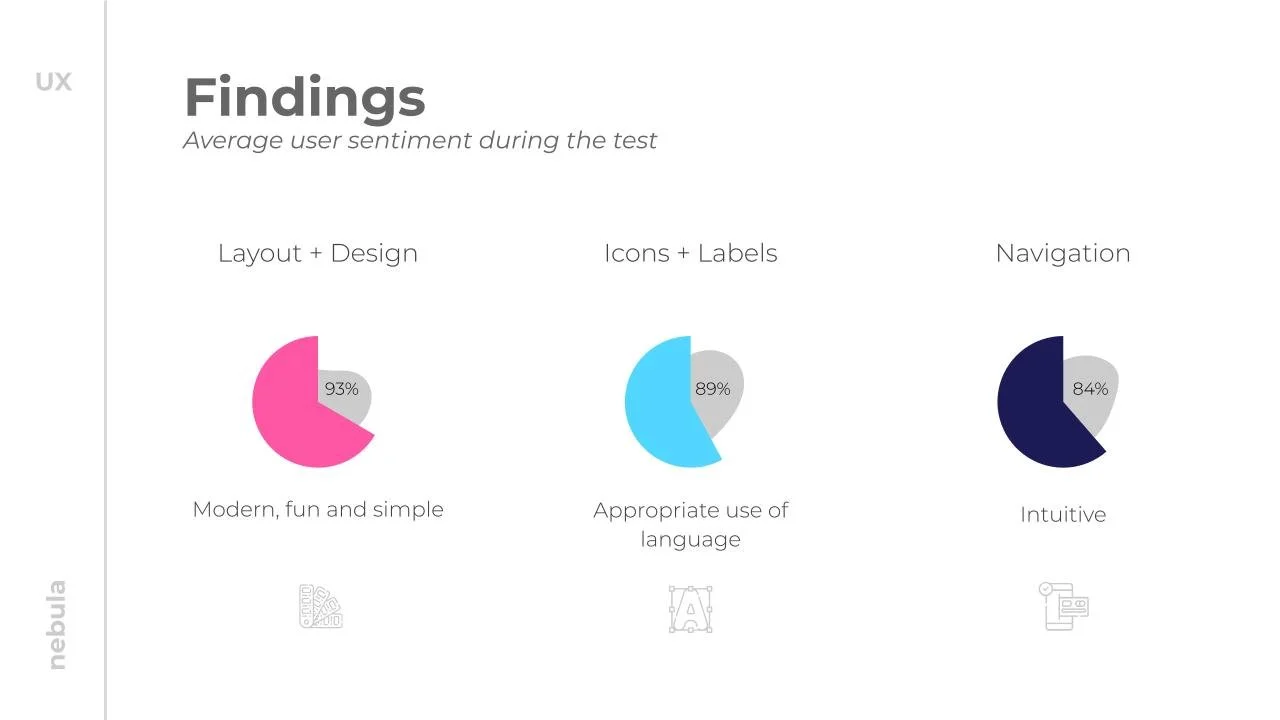
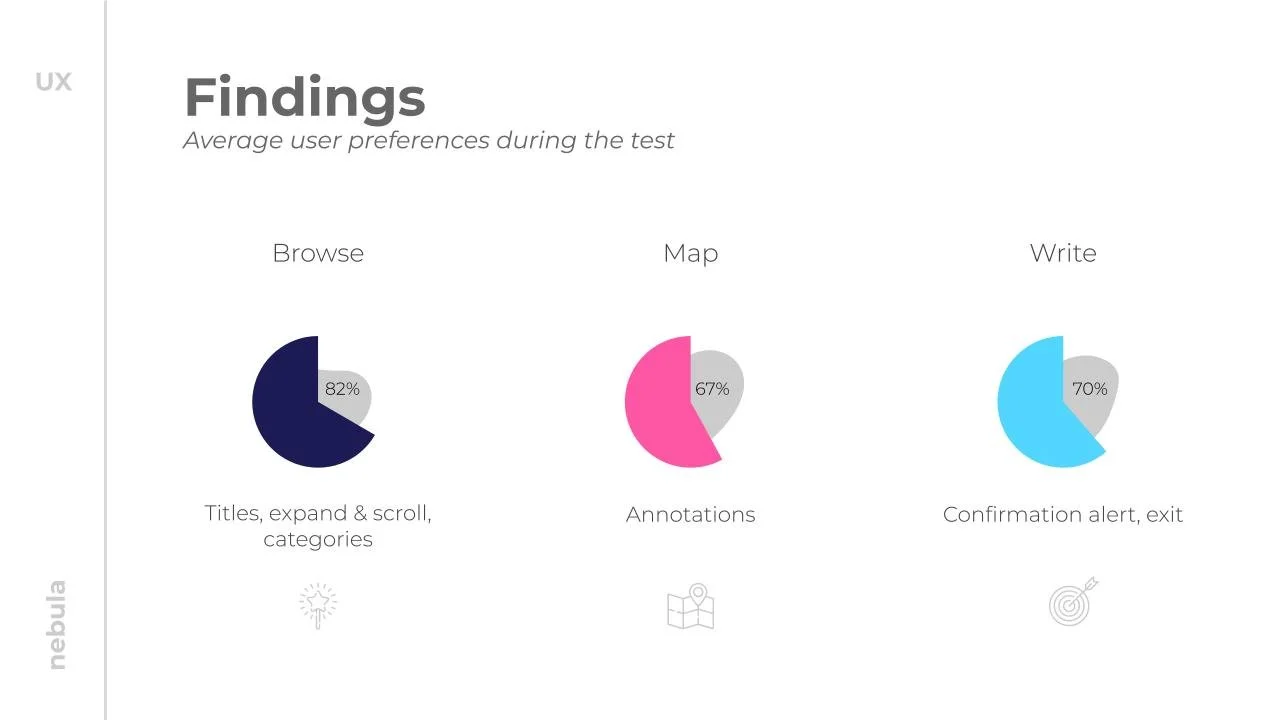
Individual project under instructor guidance. I led the research, designed the app in Adobe XD, and built a beta in Xcode with Firebase that included sign-up, story browsing, and location pins. I then ran 15 usability tests with iOS users. As a solo capstone, this project gave me hands-on experience across the full product cycle, which I now draw on when collaborating with design, product, and engineering teams.
Tools
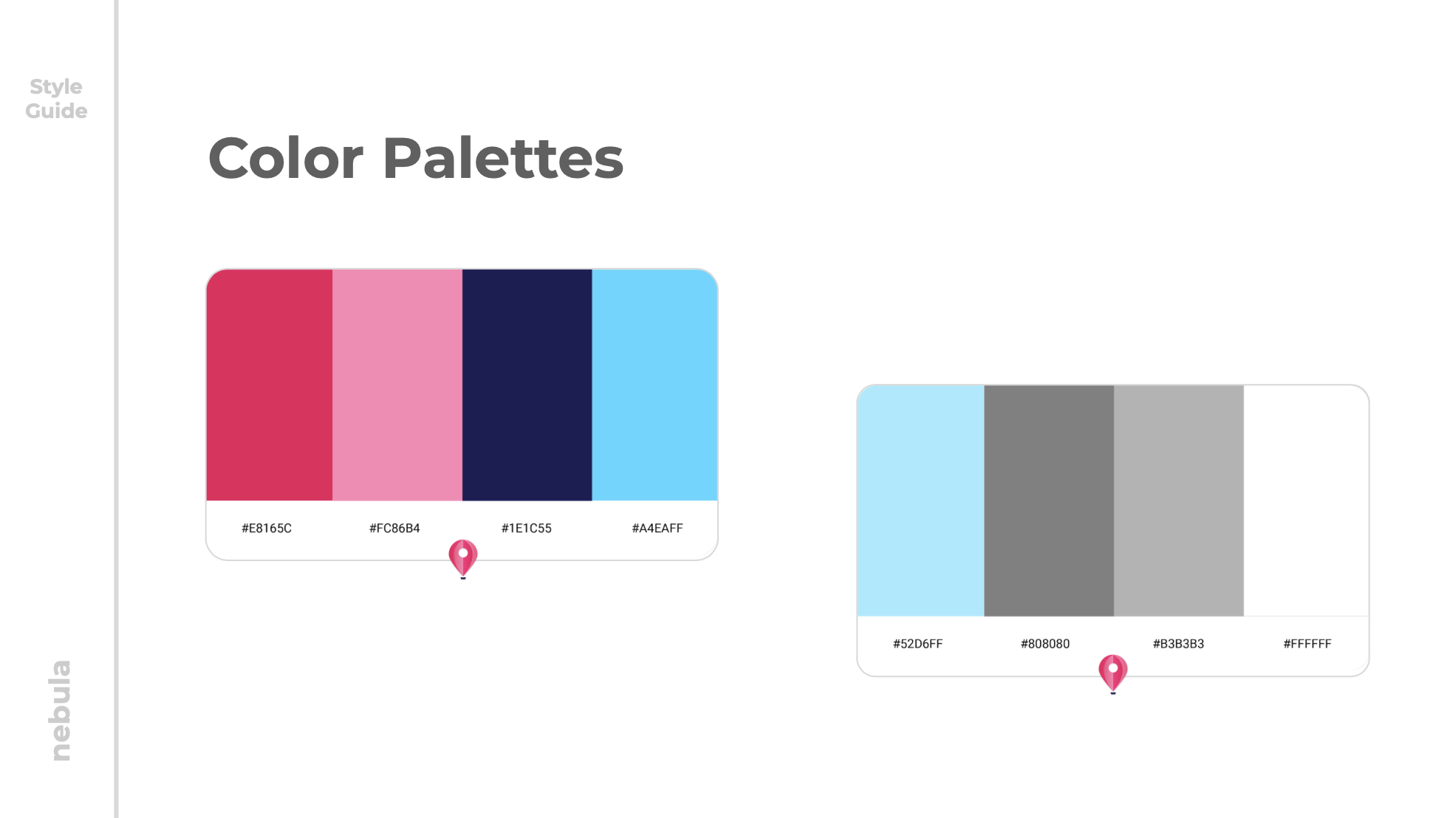
Adobe Illustrator and Photoshop for branding, including logo design and color palette
Adobe XD for wireframes and prototyping
Xcode and Firebase for the beta build
Google Workspace for project management
Project Timeline

I worked on the Nebula capstone project over the course of a year. In Fall 2018, I began by ideating and brainstorming potential concepts. By Spring 2019, I selected the final idea and completed the business analysis and design phase. Throughout Summer 2019, I developed the prototype, and by Fall 2019, I conducted testing and presented my findings. This structured, phased approach allowed me to refine the concept and ensure a thoughtful, user-centered solution.
I began by sketching initial concepts, which quickly evolved into wireframes and user flows. Nebula started to take shape, transforming from a concept into a structured design. By the end of Fall 2019, Nebula was finalized as my capstone project for the remainder of my Master’s program.
Beta App Walkthrough & Usability Test
A quick look at Nebula’s working beta app, built in Xcode with Firebase. The walkthrough follows a reader from sign-up to browsing stories and its location pin.




Additional Deliverables
〰️
Additional Deliverables 〰️

Nebula offers the flexibility to share your stories and track your creative journey, connecting you with others who share a passion for storytelling.
Onboarding Flow
-

Join
Sign up for a Nebula account to join a community of writers and readers and get access to the latest stories from around the world.
-

Create & Browse
Writers can publish the stories, poems, and novels they’ve been wanting to share. Readers can filter by genre, location, or publication date to discover new work from nearby and distant authors.
-

Connect & Explore
Writers can connect with fellow authors and organize meet-ups. Readers can visit the locations pinned in their favorite stories for deeper insight into the characters, backstories, and places that inspired them.
Style Guide
I created a four-slide style guide defining Nebula’s logo usage, color palette, typography, and layout principles to keep the brand consistent across the app and marketing materials. Here’s a link the slide deck below.